
-
+86-13362601721
-
Houwayu Industry Zone, Daxi Town, 317525, Wenling City, Zhejiang Province, China
Driven by technological innovation, we deliver efficient and reliable water pumps that empower a better quality of life.
Houwayu Industry Zone, Daxi Town, 317525, Wenling City, Zhejiang Province, China

From Demand-Based Operation and Energy Efficiency to Low-Noise Comfort: How Smart Water Systems Are Redefining Pump Value
When people talk about smart buildings, the conversation often focuses on lighting, air conditioning, access control, energy management, and building automation. 🏢
However, a truly efficient and comfortable building also depends on the performance of its water systems. 💧
Whether used for residential water supply, domestic hot water circulation, heating systems, or HVAC applications in light commercial buildings, water pumps do far more than simply move water. They can directly influence energy consumption, water pressure stability, operating noise, maintenance requirements, and overall user comfort.
As building markets place greater emphasis on energy efficiency, comfort, and long-term operational reliability, the value of water pump products is changing as well:
From individual product specifications to system matching.
From fixed-speed operation to demand-based adjustment.
From purchase price to lifecycle value. 📈
This is why brand owners, distributors, system integrators, and engineering customers are paying increasing attention to smart pumps, permanent magnet motors, variable frequency technology, and integrated water pump solutions. 🤝
01 | Water System Upgrades Are Not Simply About Replacing a Pump
Traditional water pumps generally operate according to a relatively simple logic:
Start → Fixed-Speed Operation → Stop
However, actual water demand is rarely constant. 📊
In residential water supply systems, demand can change significantly during morning and evening peak periods, water heater operation, simultaneous use of multiple outlets, differences between building floors, and changes in pipeline resistance. 🚿
Heating, hot water circulation, and HVAC systems also experience changing loads and operating conditions depending on system design, operating schedules, and hydraulic requirements.
When a pump continuously operates at a fixed condition, two challenges may arise:
At lower demand, the pump may operate at a higher output than necessary, resulting in avoidable energy consumption.
When demand changes, the system may not respond as smoothly to changing pressure and flow requirements.
Therefore, a modern water pump system upgrade is not simply about selecting a higher-power pump. It is about making the pump better match the actual operating conditions of the system.
This is one reason variable frequency control and intelligent pump technology are attracting greater attention.
By adjusting pump output according to changing system demand, the pump can operate across different conditions rather than simply switching between “on” and “off.”
For end users, this can contribute to more stable water pressure, smoother operation, and lower operating noise.
For B2B customers, it creates clearer product differentiation and opens opportunities in mid- to high-end residential, light commercial, and water system retrofit markets.
02 | From Constant-Speed Operation to Demand-Based Operation
Energy efficiency in the water pump industry is not simply a marketing concept. 🌱
The real value of energy efficiency is demonstrated through actual operating performance over time.
In the past, pump selection often focused on rated power, flow, head, and purchase price. Today, more customers are asking broader questions:
Can the pump maintain an appropriate operating condition under changing system demand?
Can it reduce unnecessary high-load operation?
Can it help lower long-term operating costs? 💰
The European Union has established Ecodesign requirements for circulators used in heating and cooling distribution systems, reflecting the growing importance of energy efficiency in circulation equipment.
The U.S. Department of Energy also identifies efficient equipment, system optimization, and appropriate variable-speed control as important approaches to improving pump system energy and cost performance.
This indicates a broader shift in pump competitiveness:
From simply being able to operate efficiently at one operating point toward achieving better efficiency under real system conditions.
The combination of permanent magnet motors and variable frequency control provides an important direction for this transition. ⚡
For brand owners, distributors, and engineering customers, the value of smart variable frequency pumps therefore goes beyond advanced technology. They can help customers:
The purchasing question is gradually changing from:
|
“How much does this pump cost?” |
to:
|
“What level of system value can this pump provide over the next several years?” |
03 | “Smart” Should Make Water Systems Simpler, Not More Complicated
The word “smart” can sometimes suggest complicated settings, additional controls, and higher operating barriers.
For water pump products, however, genuinely useful smart technology should make everyday operation simpler and more automatic. 👌
End users do not need to understand every control algorithm.
What they really care about is:
The purpose of smart pump technology is therefore not to add as many functions as possible, but to use control logic, operating modes, sensors, and protection functions to help the pump respond more effectively to actual operating conditions. 🤖
For residential water supply applications, for example, a smart booster pump can adjust its operating condition according to water demand. Combined with automatic start/stop, pressure control, and multiple protection functions, this can provide a more stable and comfortable water supply experience.
For B2B customers, these capabilities can also support:
Ultimately, the value of smart technology is not making a pump appear more complicated.
It is helping the water system operate more intelligently in the background. ✨
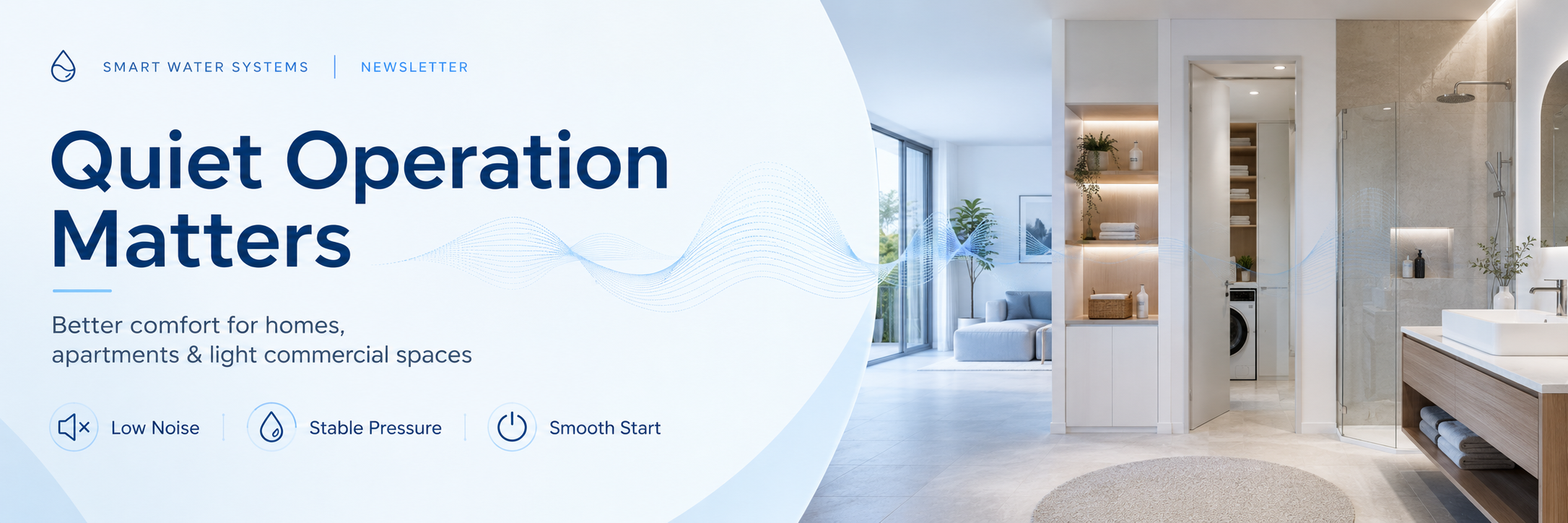
04 | Low Noise Is Becoming an Important Part of Water System Competitiveness
Traditional pump selection often begins with flow, head, power, and price.
As residential buildings, apartments, hotels, and light commercial spaces place greater emphasis on comfort, however, pump operating noise is becoming an increasingly important consideration.
This is especially relevant for residential boosting, domestic hot water circulation, indoor equipment rooms, apartments, and hotel applications, where pumps may operate relatively close to occupants. 🏨
Users may notice questions such as:
Is startup smooth?
Is the pump quiet during nighttime operation?
Are pressure changes noticeable?
Does the system remain stable during continuous operation?
Some LIXINGPRO smart pump models can achieve operating noise levels as low as 45 dB under specified test conditions.
However, low noise should not be considered in isolation. Pump noise can be influenced by motor design, control technology, structural design, installation conditions, and system operating conditions.
For brands and distributors, low-noise performance is therefore more than an additional specification.
It can support product positioning in residential, apartment, hotel, and light commercial applications, while contributing to a better end-user experience and potentially reducing noise-related complaints.
In this sense, low-noise operation is becoming part of overall water pump product competitiveness. 🚀
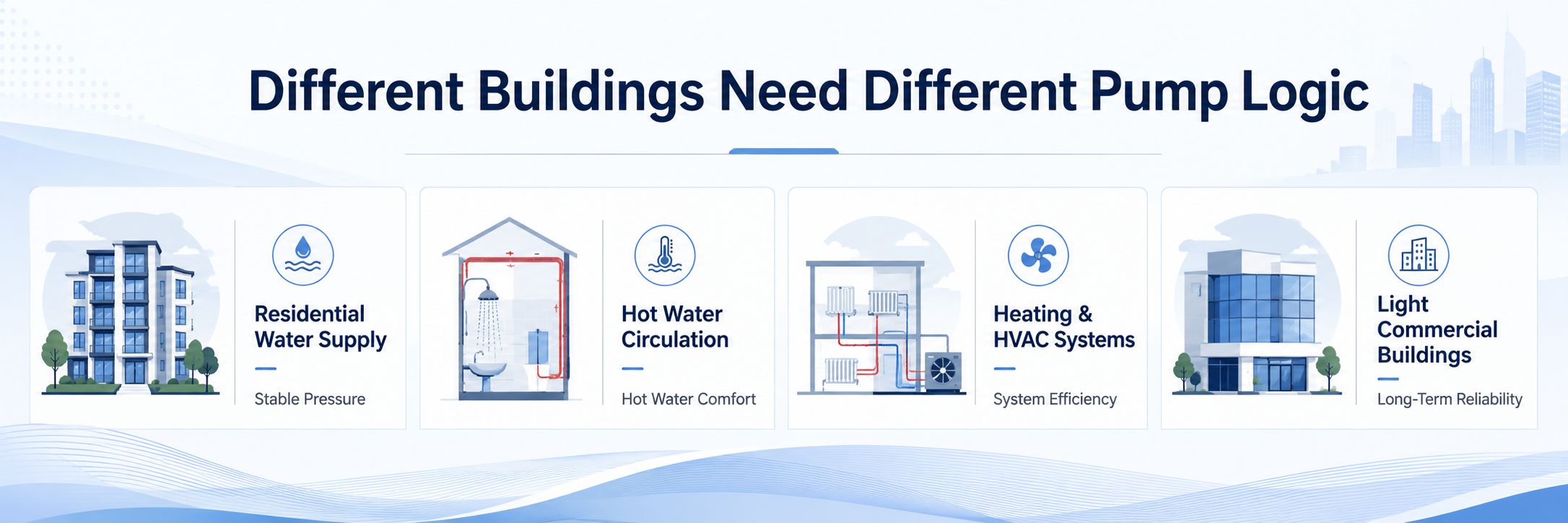
05 | Different Building Applications Require Different Pump Strategies
Smart pump technology does not mean that one pump can meet every application requirement.
Building type, climate, water supply structure, operating conditions, and market positioning can all influence pump selection.
Residential Water Supply
In residential water supply systems, customers typically focus on:
These requirements are well suited to smart booster pumps, permanent magnet variable frequency booster pumps, and constant-pressure water supply solutions.
For distributors and brand owners, these products can support product lines for domestic water boosting, villas, apartments, and multiple-outlet residential systems. 🏡
Domestic Hot Water Circulation
In domestic hot water systems, the pump influences more than water circulation. It can also affect how quickly hot water reaches points of use, system comfort, and long-term operating stability.
Key considerations typically include:
These requirements make suitable hot water circulation pumps important for residential, apartment, hotel, and light commercial applications. ♨️
Heating and HVAC Systems
In heating and HVAC water systems, circulation pump performance is closely connected to overall system efficiency.
The pump needs to provide reliable circulation while adapting to different system loads and operating conditions.
Important selection factors include:
As building energy-efficiency requirements continue to develop, circulation pumps are increasingly being considered as part of the overall building system rather than as isolated equipment. 🔥
Light Commercial Buildings
Small hotels, apartments, offices, commercial spaces, and other light commercial buildings may require pumps to operate for longer periods and under more frequent usage.
In these applications, customers often pay close attention to:
For project and channel customers, reliable pump performance can help reduce maintenance pressure and support a more consistent experience after project delivery. 🏢
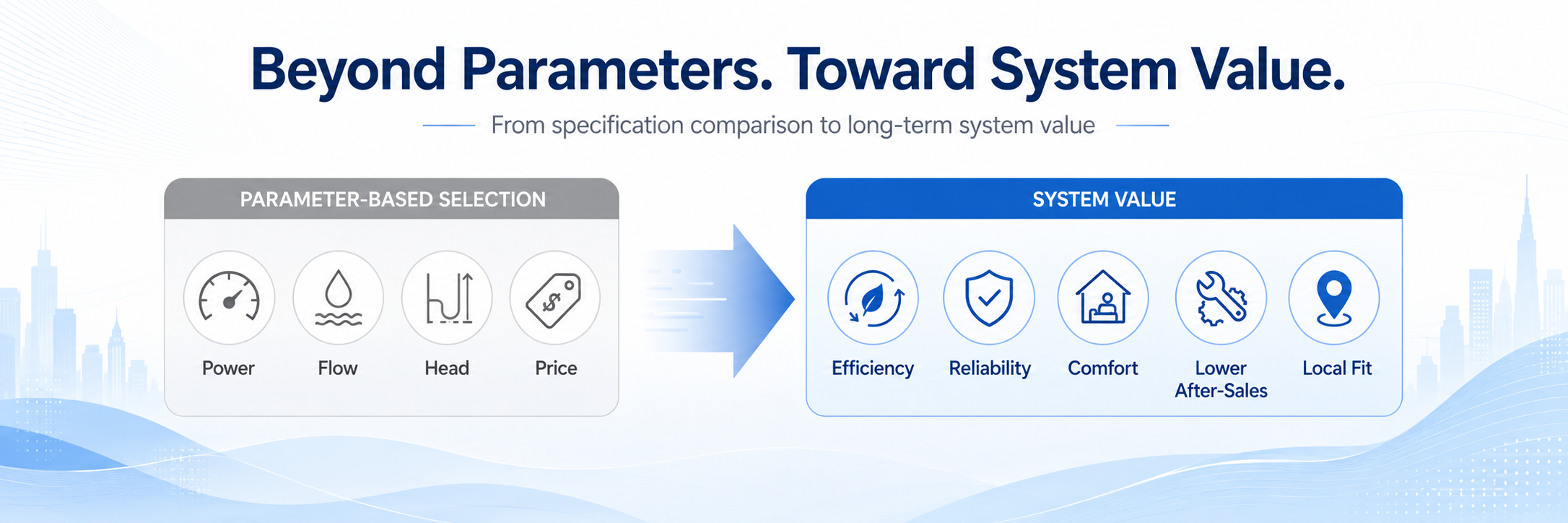
06 | Water Pump Products Are Moving from Specification Competition to System Value Competition
In the past, water pumps were often compared through a simple specification table:
Power.
Flow.
Head.
Price.
These specifications remain important, but they are no longer the only factors that determine product value.
For modern building water systems, customers are increasingly evaluating:
This is why B2B customers increasingly need water pump product portfolio capabilities, rather than simply individual models.
A reliable pump supplier should be able to help customers select different products according to their target markets, application scenarios, channels, and positioning.
The objective is not simply to supply a pump.
It is to provide a pump solution that fits the system and the market. 🧩
07 | LIXINGPRO Water Pump Solutions for Different Applications
As smart building and modern water system technologies continue to develop, LIXINGPRO focuses on practical requirements across residential water supply, domestic hot water, heating circulation, HVAC, and light commercial applications.
Smart Booster Pump Solutions
Suitable for residential water supply, multiple water outlets, villas, apartments, and light commercial applications.
Key features can include:
These solutions can help brand owners and distributors develop higher-value smart booster pump product lines. 💧
High-Efficiency Circulation Pump Solutions
Suitable for heating circulation, underfloor heating, radiator systems, domestic hot water circulation, and small HVAC systems.
Key features include:
These products can help customers expand their offerings across HVAC, heating, hot water, and building water system applications.
OEM / ODM Support
For brands and distributors serving different regional markets, product customization and localization are also important.
LIXINGPRO can support customers with:
The goal is to help customers develop water pump product portfolios that better match local market requirements, while reducing unnecessary trial and communication costs. 🤝
08 | The Future of Smart Water Pump Systems
We believe smart water systems will continue to develop around three major directions.
Smarter | More Adaptive 🧠
Water pumps will increasingly move from fixed operation toward dynamic adjustment, responding to changes in pressure, flow, temperature, and system load.
The objective is not to increase user complexity, but to make the equipment more responsive to actual system conditions.
More Efficient | Better Lifecycle Performance ⚡
Customers will increasingly look beyond rated power and individual efficiency values and consider the pump's energy consumption throughout its actual operating cycle.
Permanent magnet motors, variable frequency control, and appropriate system matching will play an increasingly important role.
More Comfortable | Lower Operating Noise 🛋️
For residential and light commercial applications, stable water pressure, quiet operation, and smooth start-up and shutdown will become increasingly important.
The ideal water pump should not only perform reliably, but also operate quietly and unobtrusively as part of the overall building system.
Conclusion | Building Smarter Water Systems
The development of smart buildings is not limited to visible automation systems and digital control interfaces.
Many of the systems that influence building energy consumption, comfort, and operational reliability are hidden behind the scenes.
Water pumps are one of them. 💧
The industry is moving from fixed-speed operation toward demand-based adjustment, from individual equipment toward system integration, and from purchase price toward lifecycle value.
For water pump manufacturers, the future question is therefore no longer simply:
“How can we manufacture a better pump?”
It is:
“How can pumps integrate more effectively into building water systems so that the overall system operates more efficiently, reliably, and quietly?”
For brands, distributors, and engineering customers, this transition also creates new opportunities:
At LIXINGPRO PUMP, we continue to focus on the connection between pump technology, application requirements, and market needs.
Because the next generation of smart buildings will need not only smart control systems, but also smarter water systems. 💧🏢
Copyright © Taizhou Lixing Pump Co., Ltd. All Rights Reserved — Privacy Policy — Blog

 EN
